
 I admit that to me, one of life’s most simple pleasures, is having access to old newspapers thanks to newspapers.com. I am not affiliated or sponsored by that website. I pay for my own yearly subscription out of my own pocket, just to be transparent.
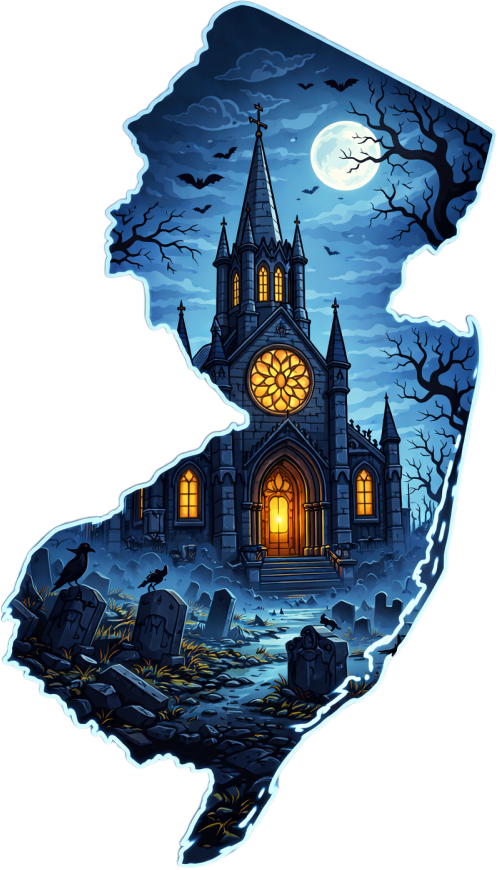
Anyway, as I was saying, as someone with a fondness for old newspapers and the paranormal and supernatural, I sometimes stumble upon reports of haunted locations that pique my curiosity. A particularly intriguing account from 1865 caught my attention, detailing a supposedly haunted church in Jersey City, New Jersey.
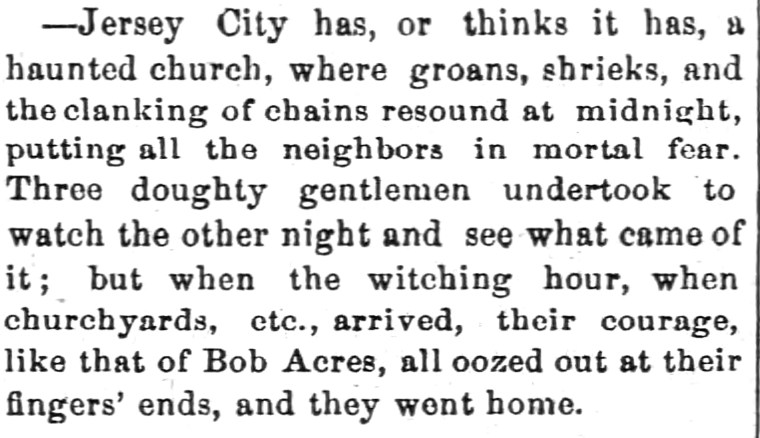
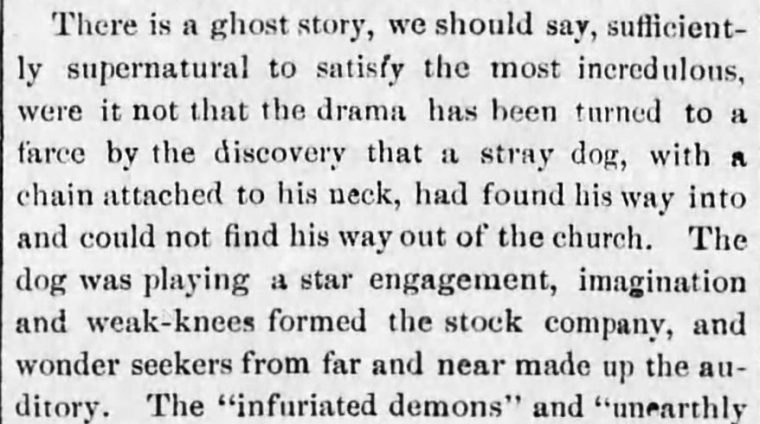
According to the news report, this church was plagued by inexplicable occurrences, starting in roughly September of 1865 and lasting for a few weeks. Police as well as various interested parties investigated and found no clue as to what was causing the ghostly commotion. After a period of time, the police finally found the answer; a small dog with its chain still attached to its collar had found its way into the church as was making horrific noises in its distress. Of course, to me, this doesn’t explain why the noises seemed to only occur at night, but, I digress.
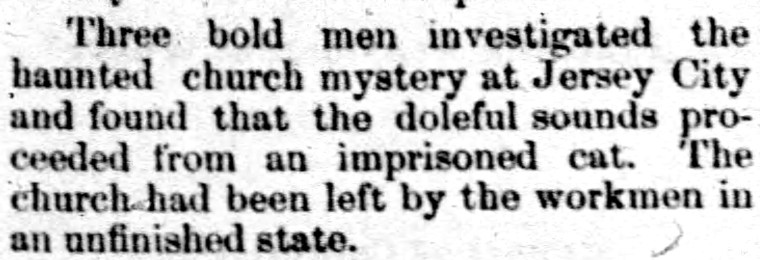
A second explanation was that it was a stray cat had been imprisoned accidentally in the church by workers and was making the ghostly noises in protest of its treatment.
And thirdly, a more interesting and reasonable explanation suggested that a group of local boys had gotten into the building, hiding beneath the floorboards to create the eerie wailing sounds that unnerved the townspeople. Despite their suspected mischief, however, these pranksters remained at large.
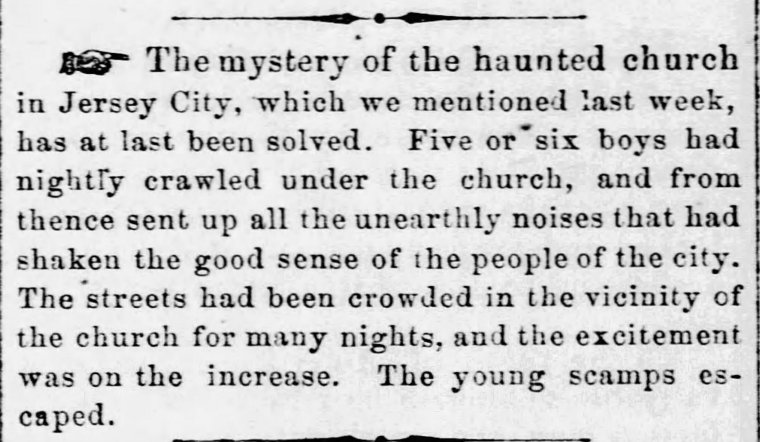
Of the proposed explanations, as mentioned, the story of the mischievous boys seems the most plausible—yet it remains unverified, as no one was ever held accountable for the disturbances. Is it likely that, in the absence of concrete evidence, the authorities and townsfolk simply needed a rational explanation for the unsettling events and settled on the most acceptable narrative of the time. No more newspaper accounts of further haunting activity so one of those must have been the answer, right? Or, could it be that the haunting still continued, but newspapers were prevented from printing any more stories?
Anyone have any additional information about this? I do realize the newspaper articles are from over 100 years ago, but a story like that might be something that locals in the area like to keep alive as part of their local folklore or history.
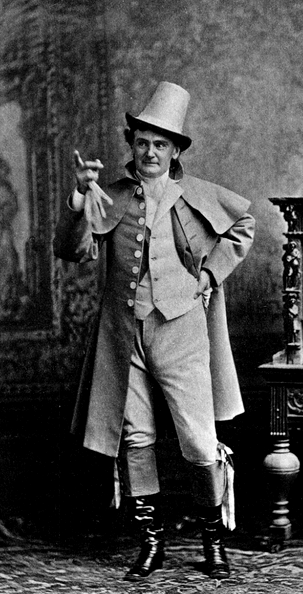 Oh, and the one article that mentions Bob Acres-well, I admit I had to do some research on that and discovered he is a fictional character from Richard Brinsley Sheridan’s classic 1775 comedy of manners, The Rivals. The character was popular in 19th-century theatre, and was often described as being comic, naive and cowardly.
He was played by American actor Joseph Jefferson (left), and there was a Louisiana train station after him — which eventually morphed into the unincorporated community Bob Acres, Louisiana.
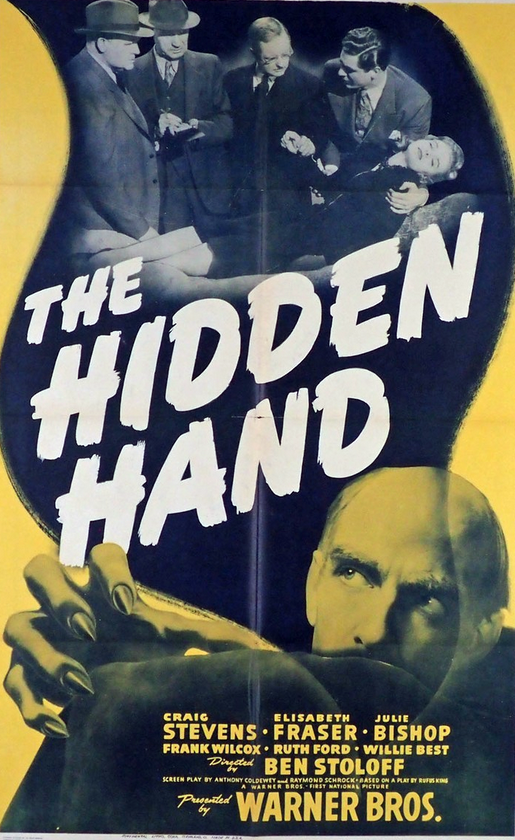 The Hidden Hand is a 1942 American comedy-horror mystery about greed, inheritance plots, and a very unusual scheme involving an escaped mental patient.

 grapleslife.org