
Below is a clipping from the Pittsburgh Press newspaper from August 2, 1903 (page 23).
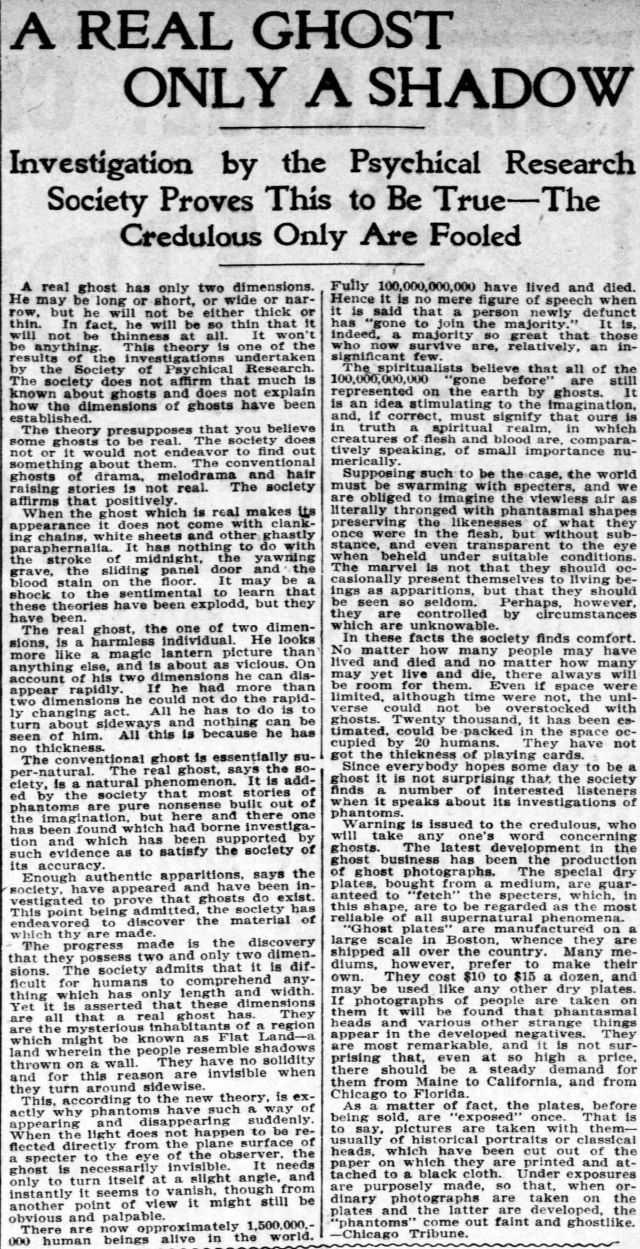
Below is a clipping from the Pittsburgh Press newspaper from August 2, 1903 (page 23).
 I admit that to me, one of life’s most simple pleasures, is having access to old newspapers thanks to newspapers.com. I am not affiliated or sponsored by that website. I pay for my own yearly subscription out of my own pocket, just to be transparent.
Anyway, as I was saying, as someone with a fondness for old newspapers and the paranormal and supernatural, I sometimes stumble upon reports of haunted locations that pique my curiosity. A particularly intriguing account from 1865 caught my attention, detailing a supposedly haunted church in Jersey City, New Jersey.
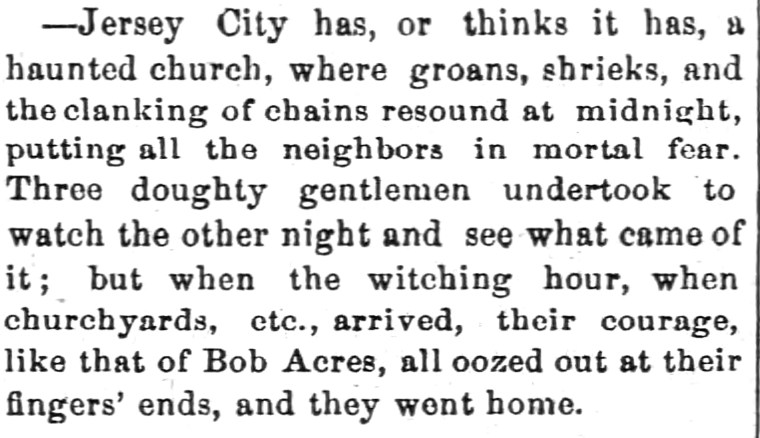
According to the news report, this church was plagued by inexplicable occurrences, starting in roughly September of 1865 and lasting for a few weeks. Police as well as various interested parties investigated and found no clue as to what was causing the ghostly commotion. After a period of time, the police finally found the answer; a small dog with its chain still attached to its collar had found its way into the church as was making horrific noises in its distress. Of course, to me, this doesn’t explain why the noises seemed to only occur at night, but, I digress.
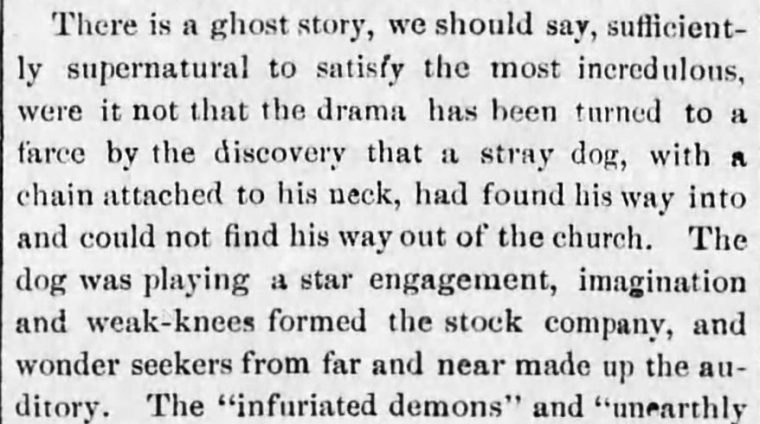
A second explanation was that it was a stray cat had been imprisoned accidentally in the church by workers and was making the ghostly noises in protest of its treatment.
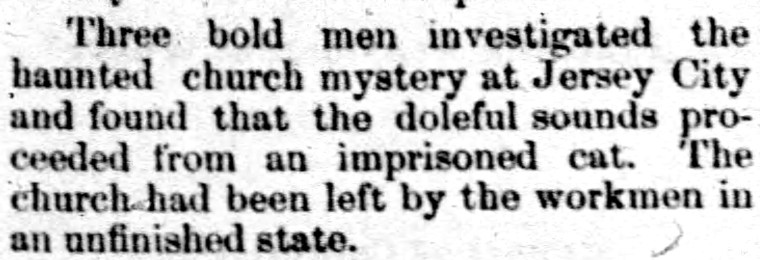
And thirdly, a more interesting and reasonable explanation suggested that a group of local boys had gotten into the building, hiding beneath the floorboards to create the eerie wailing sounds that unnerved the townspeople. Despite their suspected mischief, however, these pranksters remained at large.
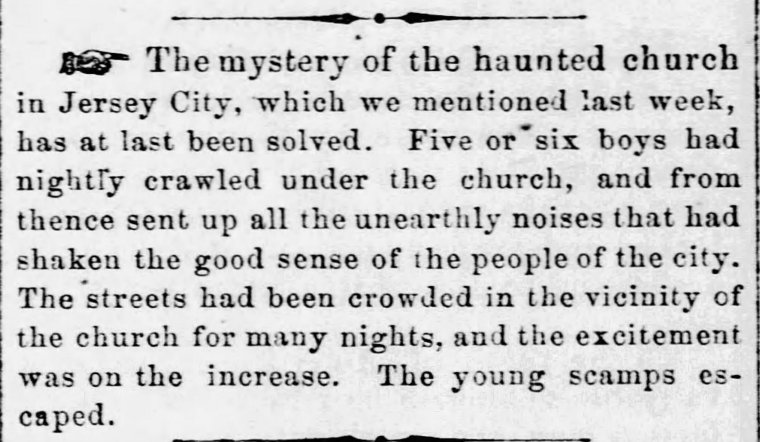
Of the proposed explanations, as mentioned, the story of the mischievous boys seems the most plausible—yet it remains unverified, as no one was ever held accountable for the disturbances. Is it likely that, in the absence of concrete evidence, the authorities and townsfolk simply needed a rational explanation for the unsettling events and settled on the most acceptable narrative of the time. No more newspaper accounts of further haunting activity so one of those must have been the answer, right? Or, could it be that the haunting still continued, but newspapers were prevented from printing any more stories?
Anyone have any additional information about this? I do realize the newspaper articles are from over 100 years ago, but a story like that might be something that locals in the area like to keep alive as part of their local folklore or history.
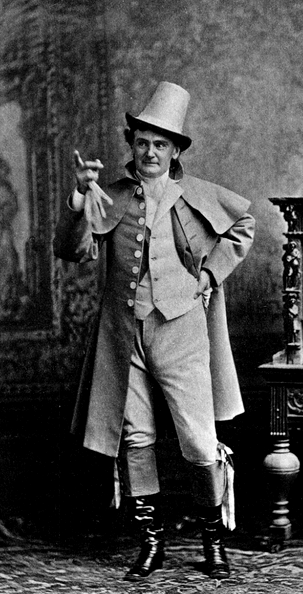 Oh, and the one article that mentions Bob Acres-well, I admit I had to do some research on that and discovered he is a fictional character from Richard Brinsley Sheridan’s classic 1775 comedy of manners, The Rivals. The character was popular in 19th-century theatre, and was often described as being comic, naive and cowardly.
He was played by American actor Joseph Jefferson (left), and there was a Louisiana train station after him — which eventually morphed into the unincorporated community Bob Acres, Louisiana.
An article pulled from the Cornwall Standard 1805. If you’re having trouble reading this article, try right-clicking it and opening the clipping in a new tab—it might make for a clearer, more comfortable read.

I found this in an 1887 issue of the Hollis Times, a newspaper out of New Hampshire and thought I would share it.
Maple Beer: To four gallons boiling water put one quart maple syrup and one tablespoonful essence of spruce; when about milk warm add one pint of yeast, and when fermented bottle it. In three days it will be fit for use
Currant Shrub: Boil currant juice and sugar, in proportion of one pound sugar to one pint juice, five minutes. Stir it constantly while cooling; when cold, bottle it. Use like raspberry shrub, one spoonful or two to a tumbler full of water.
Raspberry Liquor: A pint of raspberries in a quart of spirits must be corked tightly for a month; then clarify a pound of sugar in a pint and a half of water; filter off the spirit and add it to the syrup; mix well and put it in small bottles.
Raspberry Vinegar: Mash two quarts of raspberries in an earthen vessel, put them in a large stone bottle or jar, pour into them two quarts of good wine vinegar, cork the jar slightly and let the juice distill in the sun or warmth for two or three weeks; then filter clear and bottle it, corking it well.
English Ginger Beer: Pour four quarts of boiling water on one ounce and a half of ginger, one ounce cream tartar, one pound brown sugar and two lemons sliced thin. Put in two gills (a gill is about 4 ounces) of yeast, let it ferment twenty-four hours and bottle it. It improves by keeping a few weeks, unless it is very hot weather, and it is a very nice beverage.
Lemonade Syrup: With one pound of sugar, rasp the yellow rind of six lemons. Moisten the sugar with as much water as it will absorb, and boil it to a clear syrup. Add the juice of twelve lemons, stirring it in well beside the fire, but do not let it boil any more. Bottle the syrup at once, and cork it when cold. Mix a little of this syrup with cold water when lemonade is wanted.
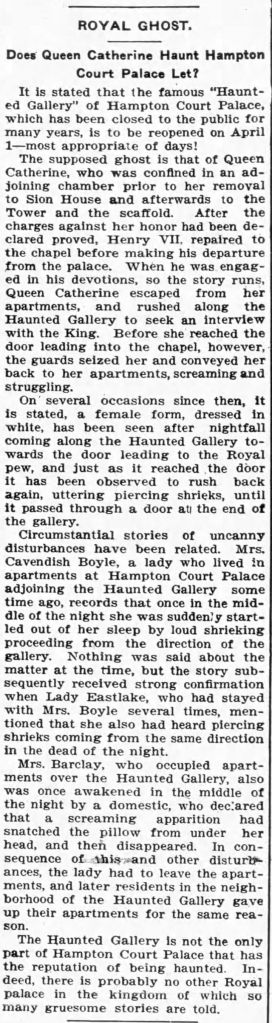
 This story appeared in the Friday, December 9, 1898 edition of the Portsmouth Daily Chronicle in Portsmouth, New Hampshire. The clipping (which I saved as an image file) was difficult to read, so I had some help from a website that converted it from image to text which I share below. I believe the article was reporting on an event that happened in Ohio.
An Old Phenomenon Whose Existence Was Explained by a Bride
The Licking River ghost has been out more during the summer of 1898 than for many years. While the terror it once caused has been largely explained away, yet there are many people who are still uncomfortable when it comes out, and newcomers here often spend anxious nights when the phenomenon makes itself manifest.
Away back in the sixties the part of Zanesville known as the Terrace, between the Muskingum and the Licking, was perturbed by ghostly occurrences. Unusual noises were heard. Latches rattled at the touch of unseen hands. Windows shook uncannily. The first and most natural theory was that a colony of ghosts had invaded Zanesville. But while this theory was acceptable to many, others doubted. For ghosts do not haunt in droves, and the Terrace had never done anything worthy of so general a visitation. supposed ghost flock came and went. It by no means confined itself to nocturnal visits. It also came by day. Servants declared they would not live in the haunted houses. Many actually left. Often there would be a period of immunity lasting for several months. Then the latches would rattle, the doors and windows shiver, and the general state of ghost activity would resume.
The people came from the other side of the river and spent nights in the afflicted houses. They always told the same story. They always heard a very persistent and creepy rattle which seemed to affect every loose window latch or ornament. The ghost colony began to affect the price of real estate. Houses which, could not be warranted against unearthly noises seemed about to enter on a career of vacancy.
It was all explained by the return of a bride and bridegroom from their honeymoon. Of course, they had been to Niagara Falls. The bridegroom took his bride to live in one of the haunted houses. A few nights later the house, in common with some twenty-five more, was visited by the ghost. The strange rattle began. It never seemed to stop. A window which shook as if it were in fear itself would be stilled by the pressure of a palm, but the noise began again when the pressure was removed.
“Why,” said the bride suddenly, her face lighting, “that window acts just like the one in our hotel at Niagara Falls.’
“What of that? There are no falls here, none to speak of,” said her husband.
“But if you’ll think the thing over, you’ll remember these ghosts appeared right after the Dillons put in their new dam,” she said.
Then he saw it, too. The theory was eagerly grasped. Investigation showed it to be the real explanation. A geologist confirmed it. The cause was known, and the phenomenon to this day is known as the Licking River ghost.
The dam in the Licking River is just at its confluence with the Muskingum. The famous old “Y” bridge which spans both rivers is located there. A dam had been built and the water fell upon a ledge of limestone which ran through the Terrace. When the water reaches a certain height it sets the ledge in vibration, which accounts for the ghosts.
This summer the Licking River ghost was often out, on account of the wet weather. But in spite of the excellent explanation many people still feel the gooseflesh rise when the windows and doors begin their uncanny rattle.
 In the December 28, 1900 edition of the newspaper the Hollis Times in Hollis, New Hampshire a person who only identified themselves as G.R. gave his or her thoughts about how the coming 100 years would evolve.
It is 1900 years since we as a Nation began to count time. It is not the privilege of every mortal to see the ending of one century and the beginning of another. You might truly say “What difference does it make?” and yet I think we do a little more keenly appreciate the changes, improvements and advantages which have come to us in the last one hundred years (we who built our first house on Christmas day 1620) if we are here when the new calendar for 1901 appears.
We can but question whether all or a part of the predictions for the next century will come true. Here are a few of the prophecies from the “most learned and conservative minds in America” for the next one hundred years. In population we shall in- crease seven fold. The average height of a person will increase two inches and people will live to be fifty years old instead of thirty five as is the average now.
Building in blocks will be illegal and every one will reside in the suburbs and the fare will be but a penny. English will be the principal language spoken. C, X and Q will be dropped from our alphabet as spelling by sound will have been adopted. Houses will have no chimneys as no fires will be needed. Hot air for heating and hot water will be turned on from faucets furnished by a central supply plant just as our gas and electricity are furnished today. Ready cooked meals will be served hot to private houses through pneumatic tubes or by automobile wagons. Having ones own cook and purchasing ones own food will be an extravagance.
There will be no mosquitoes or flies. No street cars in our large cities. All traffic will be below or high above ground. Photographs will be telegraphed from any distance. If there be a battle in China a hundred years hence, snap shots of the event can be published an hour later and will reproduce all of natures colors. Trains will run one hundred and fifty miles an hour. New York to California in thirty six hours, no stops for water or coal. Automobiles will be cheaper than horses are today. Farmers will use them instead of the horse which will be more scarce than the ox is now.
Gymnastics will be compulsory in the schools, and a man or woman who cannot walk ten miles at a stretch will be a back number. Electric ships will go from New York to Liverpool in two days. There will be Air ships. In time of war they will hurl deadly thunderbolts which will destroy whole cities, while the fleet of air ships will be hiding among the clouds. Wild animals will cease to be, cats and mice will be extinct, cattle and sheep will have no horns.
Wireless telephone and telegraph circuits will span the world, and by the aid of huge cameras and telescopes electrically connected one can see and hear from China as readily as from Cambridge at the present time. A University education will be free to every one. Oranges will be grown in the Middle States. Strawberries, cranberries and currants will be as large as apples. All berries will be seedless. Figs will be raised here in New Hampshire, peas will be as large as beets, roses as large as cabbage heads.
A man in mid ocean can converse with his wife in her own home. Coal will nearly be exhausted. All of our restless waters both fresh and salt will be harnessed to do the work for making electricity for heat, light, and fuel as Niagara is doing today. Last but not least wonder if the one thousand different “right ways” which are being taught today to tell us how to live and how to die will merge into one and that one to do right because it is right.
 grapleslife.org