Back to the Bookshop: Childhood Reads, Scary Stories, and Nostalgia

As I get older, I find myself drifting back to childhood, revisiting some of my favorite memories. As a kid, one of the things I always looked forward to was spending time at my favorite bookstore, The Cumberland Book Shop in the MJ Mall in Carlisle, Pennsylvania. I could easily lose hours in that place. I loved being surrounded by books, and I have to admit, one of my childhood dreams was to own a bookstore when I grew up. That, sadly, never happened.

I bought a lot of books there. I was especially fond of Alfred Hitchcock and the Three Investigators—Jupiter Jones, Pete Crenshaw and Bob Andrews—their office in a trailer hidden in the Jones Salvage Yard was one of the coolest places I had ever encountered in a book as a kid and honestly, I still think it is.   I never read the books in order, I always went for the editions that had the coolest titles and believe me, it was sometimes extremely difficult for me to pick which book I wanted to purchase.  A few of the titles that caught my attention as a kid; The Secret of the Haunted Mirror,  The Mystery of the Green Ghost,  The Mystery of the Screaming Clock.  Wow, what memories, indeed.

I also bought Nancy Drew books, but I can’t say that there was much about those stories that really made an impression.  They were quick, fun reads with titles like The Haunted Showboat, The Moonstone Castle Mystery, The Secret of the Old Clock and so many more.   I will say that I was really happy, when in 1977, on ABC network, I believe it was, that Nancy Drew and the Hardy Boys (I never read those books) came to life with Pamela Sue Martin as Nancy Drew and Shaun Cassidy and Parker Stevenson as Joe and Frank Hardy.  I loved that show and was disappointed when the character of Nancy was dropped and the Hardy Boys were transformed into older more mature operatives that worked for the US government.  I didn’t want the show to become more adult, I was still a kid!!  Besides, there were plenty of adult cop/detective shows on already, who needed another one, but I digress.

Scary Books From John Bellairs and Others

There was a stretch during my childhood when I was reading a lot of scary books—scary, at least from a kid’s perspective. Authors like John Bellairs and Scott Corbett, along with others I sadly can’t recall now. Bummer.
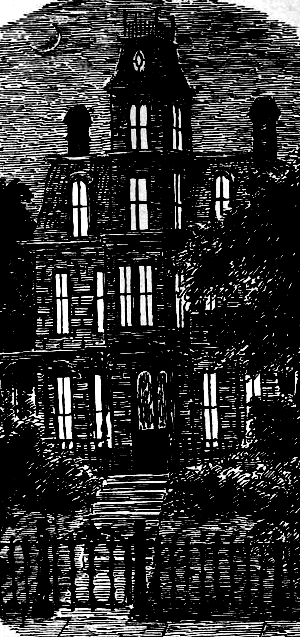
I really loved the Bellairs books, and his first, The House with a Clock in Its Walls, quickly made me a fan. I was especially taken with Lewis Barnavelt, the young hero of the story who was sent to live with his  Uncle Jonathan in a big, old, slightly spooky house after the death of his parents.  Uncle Jonathan’s house was the kind of house I always wanted to live in someday (minis the ticking clock set to launch doomsday, of course). After finishing the book, I could hardly wait to get back to the bookstore to see what other Bellairs’s titles they had in stock. When I spotted The Figure in the Shadows, I knew immediately what my next purchase would be and I wasn’t disappointed.
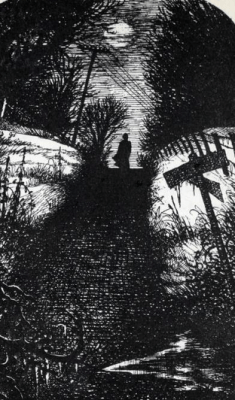
I can still vividly recall the illustrations from that book, especially one that sent chills down my spine. It showed a solitary figure making its way down a lonely road. I could almost hear the rustling leaves and picture the long, cape-like coat billowing in the night air. The scene had that quiet, creeping feeling to it—the figure moving steadily forward, one step at a time, closing in on an unsuspecting Lewis. The illustrations were done by Edward Gorey, and he had a real knack for bringing Bellairs’ eerie worlds to life.  Sadly, both John and Edward are gone.

Batman Superman and Wonder Woman
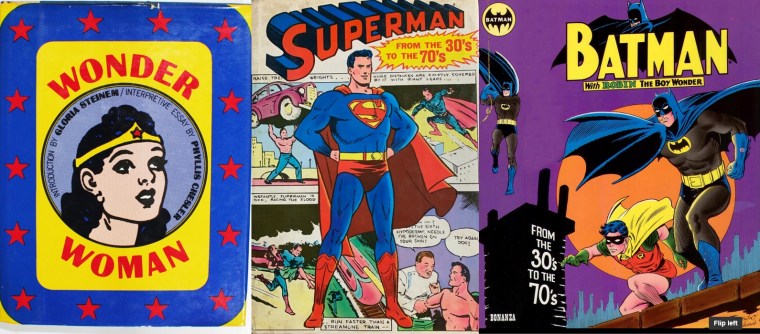
I also remember—at least vaguely—buying three hardcover books: Batman from the 1930s to the 1970s, Superman from the 1930s to the 1970s, and Wonder Woman sometime around 1977, possibly 1978. I still have them, packed away somewhere in my store room, though it would probably take me days—maybe weeks—to dig them out. So I did the next best thing and looked them up on eBay. I found that Batman and Superman sold for $12.95 each, and Wonder Woman for $6.95. There’s no way I paid full price for all three—that would’ve been over $30, which to a kid like me back then, was a small fortune. My guess is they came from the store’s discount table. Whether I bought them all at once or one at a time, I really couldn’t say. All I know is that I ended up with them—and still have them, minus their dust jackets. Another bummer.

As for why I bought them… well, that part’s a little easier. I liked Batman and Wonder Woman, so those were easy choices. Superman, on the other hand? I wasn’t much of a fan then, and I’m still not now. So my best guess is that it was discounted too and it completed the makeshift set. That’s my story, and I’m sticking to it. :)

As the titles suggest, the Batman and Superman books collect some of the best comic strips for each hero from the 1930s through the 1970s.  Years after the fact, I discovered there was a Shazam edition (Shazam! From the 40’s to the 70’s)  that I would have probably purchased if it had been available and discounted, too.  I wasn’t too familiar with that comic series, except for seeing Captain Marvel in the 70s Saturday morning live-action series Shazam/Isis Hour which ran from 1974-76.

The Wonder Woman volume focuses more on her early appearances from the 1940s, when she was created by William Moulton Marston. It really comes across as a tribute to one of the first female superheroes—an icon for young girls of that era, and honestly, still today.  And,  yep, I bet you guessed it, in 1974 there was a Wonder Woman television movie starring Cathy Lee Crosby and eventually a series starring Lynda Carter in the role and I loved both of those!

But, I admit I did very much enjoy reading those books, it was a nice introduction to the comic series.  I didn’t purchase many comic books as a kid, I was more a teen magazine reader, but I do have a few Wonder Woman and Superman comics (the Superman I inherited from my brother when he outgrew reading comics) in my magazine collection.

Well, enough walking down memory lane for now.  What about you, do you have favorite books from childhood?  Favorite memories from childhood to visit from time to time?
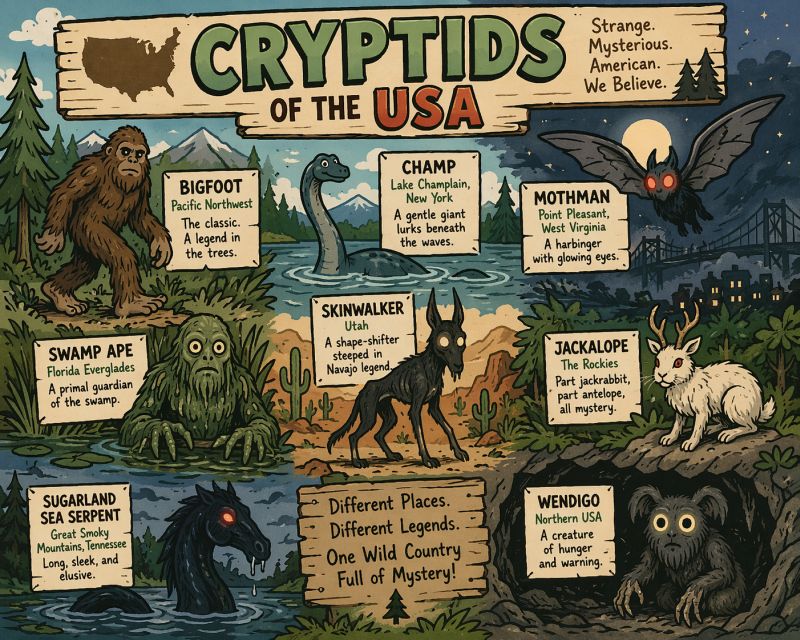
Cryptids of the USA

I admit it, I like things that are odd, spooky, creepy, weird, etc, etc, etc., and the United States is a goldmine for “cryptids”—fit nicely on this list.  Cryptids, for those who are unaware, are mysterious creatures that inhabit our folklore and campfire stories, even if they’ve never been caught on camera by a scientist. From the towering, ape-like Bigfoot to elusive lake monsters, winged terrors, and shape-shifting anomalies, these beings are woven into the fabric of our landscapes. Whether rooted in ancient Indigenous traditions, pioneer tall tales, or modern urban legends, these creatures seem to claim the wildest corners of our country, from deep swamps and dark forests to mist-covered mountains.
While icons like Bigfoot or the Mothman are famous nationwide, most cryptids are local celebrities, tied closely to a single state or region. I’ve put together a guide to the most well-known cryptid in every state, drawing from cryptozoology books, folklore anthologies, and popular enthusiast databases like Brilliant Maps. For every state, you’ll find one or two standout creatures, along with a quick look at what they are and the legends that keep them alive.

I’ve organized it alphabetically by state for easy reference.

  • Alabama — White Thang-A large, white-furred, ape-like creature (sometimes described as an albino Bigfoot or lion-like beast) with glowing red eyes. Sightings date back decades, often in rural wooded areas; it’s tied to eerie howls and livestock attacks.
  • Alaska — Tizheruk (or Iliamna Lake Monster)- A massive, serpentine or whale-like aquatic creature in Iliamna Lake and coastal waters. Inuit legends describe it as a giant eel- or crocodile-like beast that can snatch people or boats.
  • Arizona — Mogollon Monster-A tall, hairy, ape-like being with red eyes and a foul odor, said to roam the Mogollon Rim’s dense forests. Reports include screams and rock-throwing behavior similar to Bigfoot.
  • Arkansas — Fouke Monster (or White River Monster in some lists). A hairy, bipedal humanoid from the swamps near Fouke (inspired the film The Legend of Boggy Creek). The White River version is more serpentine/aquatic in eastern Arkansas.
  • California — Tahoe Tessie (or Dark Watchers / Fresno Nightcrawlers in other contexts)
    A large lake serpent in Lake Tahoe. The Dark Watchers are tall, shadowy humanoid figures seen in the Santa Lucia Mountains, while Fresno Nightcrawlers are bizarre, leg-only entities caught on video.
  • Colorado — Slide-Rock Bolter-A gigantic, whale-like creature in the Rockies that uses hooks on its split tail to cling to mountainsides and ambush prey by sliding down slopes at high speed.  It is said to have slits for eyes, a mouth that runs all the way behind its ears and loves to eat tourists. You have been warned!  :)
  • Connecticut — Melon Heads. Small, humanoids  with large heads  said to be escaped asylum patients or inbred mutants living in woods; aggressive toward intruders. Said to be mostly associated with Fairfield county area.
  • Delaware — Zwaanendael Merman (or Pukwudgie in some regional overlaps). A merman-like sea creature reported off the coast; Pukwudgie (a troll-like trickster from nearby Algonquian lore) sometimes extends here. Also the Selbyville Swamp Monster
  • Florida — Skunk Ape. Florida’s Bigfoot equivalent: a foul-smelling, hairy humanoid in the Everglades and swamps, often linked to misidentified bears or escaped primates.
  • Georgia — Altamaha-ha (Altie) A serpentine river monster in the Altamaha River, described as 20-30 feet long with flippers or a crocodile-like head.
  • Hawaii — Menehune. Small, dwarf-like builders from Hawaiian mythology (not always “cryptid” in the modern sense but often treated as such); nocturnal workers who construct structures overnight.
  • Idaho — Sharlie (or Lake Payette Monster). A serpentine lake creature in Payette Lake, similar to Nessie, with hump sightings dating back over a century.
  • Illinois — Enfield Horror. A three-legged, gray, kangaroo-like creature with glowing pink eyes that attacked people in 1973; one of the stranger “hopping” cryptids.  Though, stories of the  Horror date back to the early to 1940s.
  • Indiana — Meshekenabek (or other local beasts like the Pope Lick Monster in nearby areas). A water-based or reptilian creature in folklore; some lists tie Indiana to werewolf-like or frogman variants.
  • Iowa — Various lesser-known (e.g., Van Meter Monster in nearby contexts). Often overlaps with Midwest dogmen or thunderbirds.
  • Kansas — Often linked to Spook Lights or variations of Bigfoot-like beings.
  • Kentucky — Pope Lick Monster (or Goatman) A half-man, half-goat hybrid under a trestle bridge who lures victims to their death (tied to urban legends and train accidents).
  • Louisiana — Rougarou (or Honey Island Swamp Monster). A werewolf-like creature from Cajun folklore, often a cursed human; Honey Island version is more Bigfoot-like in swamps.
  • Maine — Variations of Bigfoot or lake monsters. Also Specter Moose first reported in the late 1890s in Allagash and Millinocket woods. Hunters reported encounters with a ghostly white colored moose that stood as high as 15 feet.
  • Maryland — Snallygaster. A dragon-like or bird-reptile hybrid with tentacles, iron beak, and one eye; 19th-20th century hoax/newspaper tales in Frederick area.
  • Massachusetts — Variations of Thunderbird or sea serpents.
  • Michigan — Michigan Dogman. A 7-foot-tall, wolf-headed humanoid with aggressive behavior; sightings spike in the north woods, often tied to Native lore.
  • Minnesota — Often Bigfoot or lake monsters. Wendigos
  • Mississippi — Variations of swamp creatures.  Mississippi River Monster
  • Missouri — Momo (Missouri Monster) A tall, hairy, foul-smelling ape-man similar to Bigfoot, with 1970s sightings near Louisiana, MO.
  • Montana — Often Bigfoot or Thunderbird. Also Shunka Warakin – Strange wolf-hyena creature.
  • Nebraska — Often variations of Bigfoot or local beasts.  Alma Vampire legend.
  • Nevada — Often desert variants or skinwalker overlaps. Tessie a Lake Tahoe serpent.
  • New Hampshire — Often lake monsters or Bigfoot.  Also Wood Devils hairy wild men from the colonial era.
  • New Jersey — Jersey Devil. A winged, hoofed, goat-headed creature born from a cursed 13th child in the Pine Barrens; one of America’s most iconic cryptids with centuries of lore.
  • New Mexico — Thunderbird (or variations like skinwalkers in Navajo areas). A massive, storm-controlling bird from Indigenous lore.
  • New York — Champ (Champy). Lake Champlain’s plesiosaur-like serpent; long-necked aquatic monster with hundreds of sightings.
  • North Carolina — Beast of Bladenboro or variations.
  • North Dakota — Often Wendigo influences or lake creatures. Also Beast of Bladenboro associated with the killing of livestock in the 1950s.
  • Ohio — Loveland Frogmen. Bipedal, frog-like humanoids seen along roadsides, carrying wands or bags; 1955 and 1972 sightings.
  • Oklahoma — Oklahoma Octopus. A giant freshwater octopus in lakes, said to drown swimmers (debated due to biology).
  • Oregon — Bigfoot hotspots (or variations like Batsquatch in nearby Pacific Northwest).
  • Pennsylvania — Squonk (or Jersey Devil overlaps). A tearful, shy creature that dissolves into tears when captured; from lumberjack folklore.  Also Raystown Ray, a large creature that inhabits Raystown Lake.
  • Rhode Island — Often sea serpents or vampire lore (e.g., Mercy Brown). Also the Glocester Ghoul.
  • South Carolina — Lizard Man of Scape Ore Swamp. A 7-foot reptilian humanoid with red eyes; 1988 attack reports.
  • South Dakota — Walgren Lake Monster (or Alkali Lake variants).A horned serpent or lake beast.
  • Tennessee — Tennessee Wildman. A hairy, screaming humanoid similar to Bigfoot.
  • Texas — Lake Worth Monster (or Goatman variants). A goat-horned, scale-covered humanoid that threw tires at cars in 1969.
  • Utah — Skinwalkers (Yee Naaldlooshii) Navajo shape-shifters (often wolf-like) tied to witchcraft; taboo and feared.
  • Vermont — Champ overlaps (Lake Champlain). Also the Bennington Monster, a Bigfoot like creature associated with Glastenbury Mountain.
  • Virginia — Snallygaster or Bigfoot variants. Also Bunny Man an axe-welding man associated with Fairfax County.
  • Washington — Bigfoot (Sasquatch). The definitive U.S. cryptid: tall, hairy, bipedal ape-man; thousands of sightings, especially in the Pacific Northwest.  Also a Batsquatch that began appearing after volcano erruption of 1980.
    West Virginia — Mothman. A winged, red-eyed humanoid with prophetic associations (linked to 1960s sightings and the Silver Bridge collapse).
  • Wisconsin — Beast of Bray Road. A werewolf-like or dogman creature seen on rural roads near Elkhorn; inspired books and films.
  • Wyoming — Jackalope. A rabbit with antelope horns; more hoax/folklore than scary, but iconic in tourism and tall tales.

Many states share cryptids (e.g., Bigfoot in dozens, Thunderbird in Western/Indigenous areas, or dogman/werewolf types in the Midwest). Some are more “popular” based on search interest or media (e.g., Mothman or Jersey Devil dominate their states culturally). Edge cases include creatures that blur folklore vs. cryptid (like Menehune or Skinwalkers) or modern “evidence” (e.g., photos/videos of Nightcrawlers).

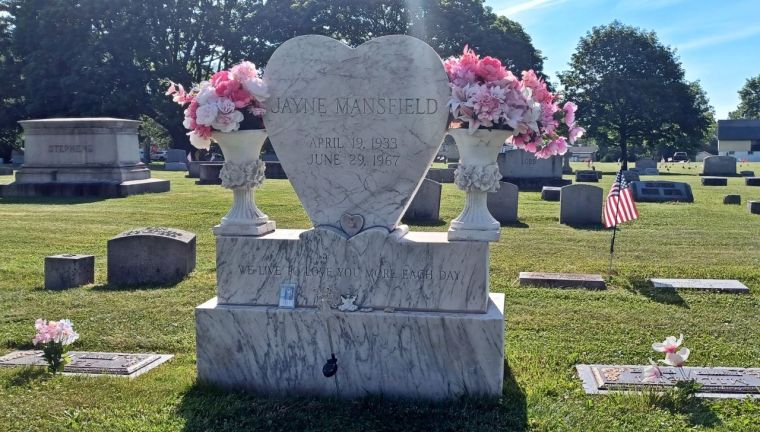
Jayne Mansfield’s Grave in Fairview Cemetery, Pen Argyl, Pennsylvania

Before I write a little about Jayne Mansfield, I need to explain how all of this began.

I first discovered Marilyn Monroe as a child in the 1970s while rummaging through a stack of old hardcover books in my grandparents’ attic. Most of them held little interest for me, but two were “year in review” volumes—either 1955 and 1956, or possibly 1954 and 1955. Skimming through the entertainment sections, I came across photos of Marilyn in The Seven Year Itch, and that was it—I was hooked.

This was long before the internet, before Google or Bing, so learning about Marilyn meant tracking down gossip magazines or the occasional book. Those sources focused almost exclusively on her, rarely mentioning the other actresses studios were grooming as their own versions of Marilyn. As a result, I knew almost nothing about the so-called “Marilyn clones.”

A few years later when I was about ten or eleven—I was standing in a grocery store, flipping through a magazine while waiting for my grandmother to finish shopping. In this magazine, I came upon a small article about a blonde actress from the 1950s named Jayne Mansfield. What caught my attention wasn’t Hollywood gossip, but two simple facts: Jayne was born in Pennsylvania, and she was buried here too. That detail alone was enough. From that moment on, Jayne’s name stayed with me. I was determined to learn everything I could about her—and someday, to visit her grave.

At the time, information about Jayne was scarce. Few books had been written, and gossip magazines only mentioned her in connection with her tragic death or her association with Anton LaVey, usually when they needed a sensational headline.

I was in my late twenties when I finally made my first trip to Pen Argyl, Pennsylvania, to visit her grave at Fairview Cemetery. The cemetery is quiet and tucked away—an unlikely resting place for a woman who thrived on glamour, hype, and Hollywood spectacle. But after her death on June 29, 1967, her second husband, Mickey Hargitay, who was divorced from her at the time, was given custody of her body. He and/or Jayne’s mother chose Fairview Cemetery. Hargitay later said that he and Jayne had visited the cemetery during their courtship and that she had remarked on how much she liked it.

In a way, it makes sense. Jayne is buried in the Palmer family plot, near her father, who died when she was very young—a loss many believe deeply affected her throughout her life. In death, she was reunited with him after decades apart, and there’s something quietly fitting about that.

Jayne’s funeral drew the expected crowd: devoted fans, curious onlookers, and people hoping to glimpse a famous face. No major Hollywood figures attended. Even Matt Cimber, whom Jayne was married to at the time of her death, did not attend. Publicly, it was said he didn’t want to upset Jayne’s mother, but as noted in Jayne Mansfield and the American Fifties by Martha Saxton, the reality was far colder—he simply did not care. Their relationship had already deteriorated into a bitter divorce and custody battle, which he ultimately lost.

Hargitay handled the burial arrangements and purchased the large, heart-shaped gravestone that marks her resting place today. It stands out among the other markers in the cemetery—and somehow, that feels appropriate. Jayne always stood out.

There are those who argue that Jayne was never truly a “star,” only a celebrity. They point to her limited box-office success, her marriages and affairs, her relentless pursuit of publicity, and her willingness to appear at store openings rather than cultivating Hollywood’s inner circles. But that argument misses something important. Jayne understood attention, image, and spectacle—and she played that game unapologetically.

Today, there’s no shortage of books, articles, and websites detailing every aspect of her life, career, and death. I’m not here to rehash all of that. This is simply the story of how I came to discover Jayne Mansfield—and how, once again, childhood curiosity turned into a lifelong connection.

Are you a fan of Jayne?  How did you discover her? Do you have a favorite movie?  A personal Jayne encounter?